1
/
of
3
MIYAGEN LW Separate Dry Socks - Tabi / Short Length
MIYAGEN LW Separate Dry Socks - Tabi / Short Length
Regular price
$25.00 USD
Regular price
Sale price
$25.00 USD
Taxes included.
Shipping calculated at checkout.
Quantity
Couldn't load pickup availability
Miyagen | LW Separate Dry Socks
■ The mechanism behind foot discomfortBefore becoming human, our ancestors had body hair everywhere, and their hands and feet were their primary areas of perspiration. Sweat was produced to create friction on the hands and feet, and it is said that the feet produce 200 ml of sweat a day. This sweat causes blisters, which can lead to injury.
■ Manila hemp-based Japanese paper yarn protects your feet from moisture and frictionIn long-distance trekking and trail running, moisture (mainly sweat) and friction can cause blisters, which may lead to injury. In fact, when I was hiking the PCT, one hiker was hospitalized after developing blisters all over their feet. As such, blisters are a serious problem in long-distance walking. Characteristics of Manila hemp-based paper yarnPaper yarn is mainly divided into two types: wood-derived and grass-derived. Among those we tested, the grass-derived Manila hemp-based paper yarn performed the best. This yarn is extremely strong, has a crisp and cooling feel, and adapts well to the body. Manila hemp is one of the strongest plant fibers, with excellent weather resistance and durability, and is used in elevator cables, marine ropes, high-end envelopes, and banknotes. However, tests revealed that because the paper yarn is so strong, using it around the ankle can cause pain. Therefore, the ankle area combines wool and nylon to create a softer, more comfortable fit. Environmentally friendly Manila hempManila hemp is a perennial plant in the Musaceae family, the same family as bananas, and resembles banana leaves. It grows in about a three-year cycle, making it a sustainable resource with a low environmental impact. This fiber has many pores, providing excellent moisture absorption, quick-drying, and deodorizing properties. Manufacturing technology and comfortUsing cutting-edge Japanese slit technology, the Manila hemp fibers are processed into a Japanese paper-like material while preserving the fibers themselves, which is then spun into yarn. Furthermore, by twisting the Manila hemp with polyester filaments, we have increased its strength and improved comfort. We also knit Cordura nylon into the manufacturing process to make it suitable for demanding sports such as long-distance trekking and trail running.
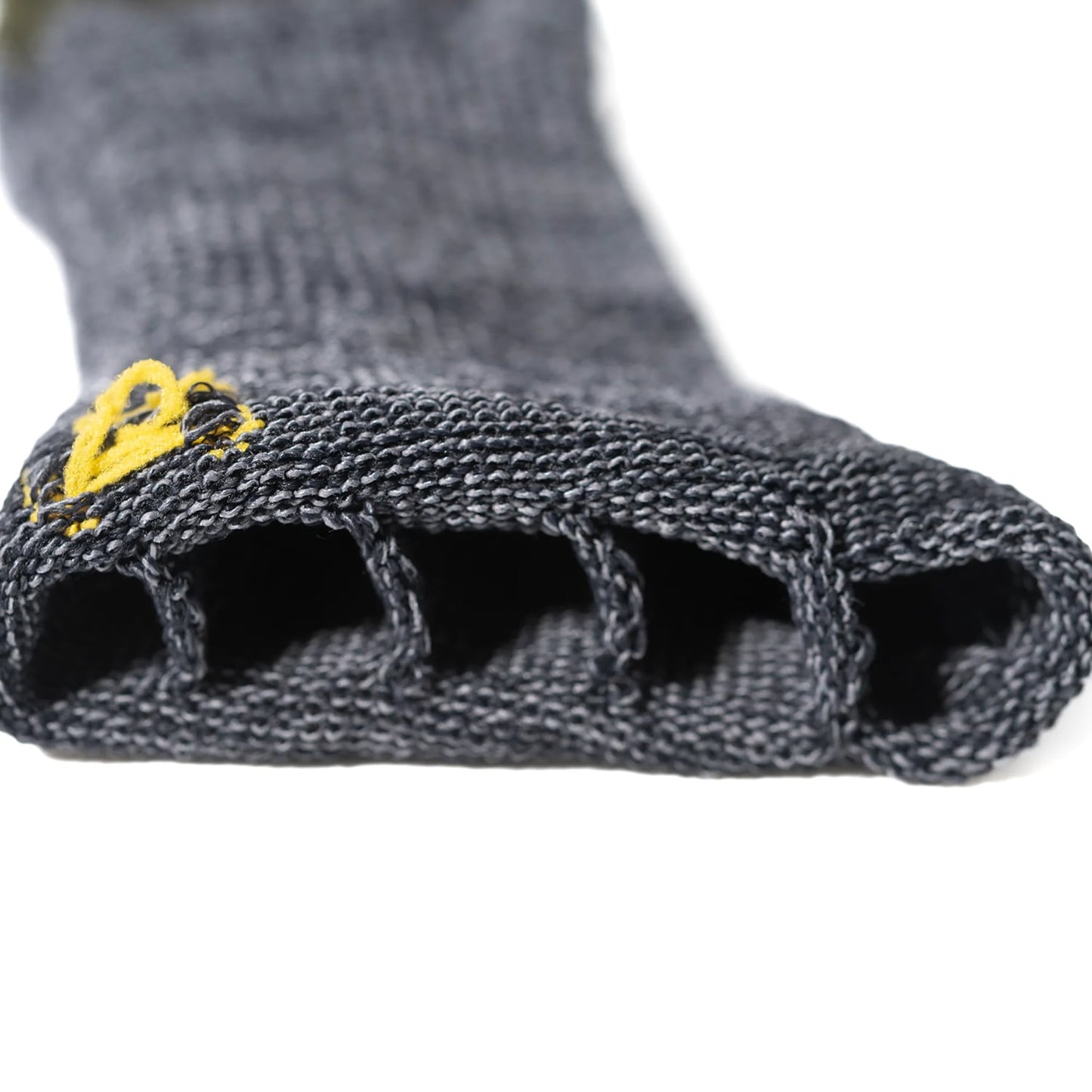
■ DesignTo maximize the benefits of this Manila hemp paper yarn, we designed the socks with dividers between the toes to prevent blisters caused by friction between the toes.
In standard five-toe socks, wrapping each toe causes two layers of fabric to overlap between the toes, widening the foot and causing chafing and fatigue.
However, the separate structure we adopted allows the fabric between the toes to be reduced to a single layer, creating a seamless, hidden five-toe sock.
The dividers prevent the toes from rubbing against each other and reduce friction from heavy loads, while also wicking and dispersing sweat from the dividers.
Although production efficiency is low, these socks use Hole Garment technology, which allows for three-dimensional knitting. We hope you will experience the comfort of this fabric.
Furthermore, the socks feature arch support to prevent slipping and can also provide a taping effect.
■ How to wear tear-resistant socksSince these socks have dividers, it is important to position your toes correctly. Please be careful when putting them on to ensure each toe is in the right place. When trekking long distances, the best way to make the socks last longer is to wash them regularly to prevent mud and sand from accumulating inside. Take off your shoes and socks to let them dry every time you take a break. Removing sand and small stones can reduce wear on the socks. If possible, wash the socks and rotate between two pairs to prevent mud buildup. When sweat and sand mix on your feet and form mud, it acts like sandpaper, damaging both the socks and shoes. Continuing to wear them in this dirty condition will quickly cause holes in the socks.
■ Product precautionsFabric and design are subject to change without notice. The fabric shown in the photos may be discontinued without notice and may no longer be available for purchase. Please be sure to trim and tidy your toenails before wearing the socks. Long nails will significantly shorten the life of the socks and cause them to tear.■ Usage precautionsThis product has been field-tested, but this does not guarantee that it will not break. Please use it at your own risk and take care not to subject it to excessive stress. The manufacturer accepts no responsibility for any damage resulting from the use of the product.
<SPEC>
Product Name: LW Separate Dry Socks
Product Number: 16020001
Weight: -
Material: Cordura nylon, Manila hemp paper yarn, Merino wool, Polyester, PU
Color: Dark Navy
Size: S: 22-24, M: 24-26, L: 26-28
Place of Production: Aichi Prefecture, Japan
Share